
Sunflowers, Sweet Briar, and Sue
“Adopt the pace of nature. Her secret is patience.” —Ralph Waldo Emerson
Our todays are so often shaped by our yesterdays. No where is that statement truer than with the way our earth beneath our feet has been formed. An oceanic plate dives beneath a continental plate, magma rises from the depths, and in a few hundred thousand years you get a mountain range. The Sierra Nevada, the Rockies, the Cascades, even the Appalachians are huge mountain ranges that stand tall and remind us that nothing great is ever accomplished overnight. It takes a long, slow, almost methodical process, and time. Like mountain formation, the effect of glaciation is a slow-moving process. These large glaciers meander their way across the surface of the earth and slowly carve out a path. It is a tidal wave of ice, rock, and sediments that cannot be stopped. The weight of the ice sheets presses down upon the land and in its wake the receding ice leaves behind valleys, ponds, lakes, and rolling hills. Everything we see today is a result of something that happened yesterday. At least, in a geological time sort of way.
North Dakota has three distinct geographical regions. The Red River Plains to the east lay claim to some of the richest soil found anywhere on the planet. If you enjoy history as I do, it is interesting that we benefit today because of so many things that happened in our past. The rich soil in the eastern North Dakota region was millions of years in the making. The silt soil is a remnant of glaciers and the largest glacial lake (700 miles long x 200 miles wide) that resided in what is now North America, Lake Agassiz. The Drift Prairie in the middle of the state also benefited from glacial deposits from long ago. There is a slight increase in elevation and the organic matter left behind by the retreating ice is not as abundant as in the Plains to the east. Still, the soil is fertile here as well and many crops are grown here in the region. To the west, and at the highest elevation in the state, sits the Missouri Plateau. This region is less fertile with more hills. The southwest corner of the region is home to the Badlands. Spared from the glacier advancement that occurred in the other two regions of the state, the Badlands cover just over a million acres of North Dakota. Water and wind have eroded the land over time and left behind these magnificent ghosts of a time long ago.
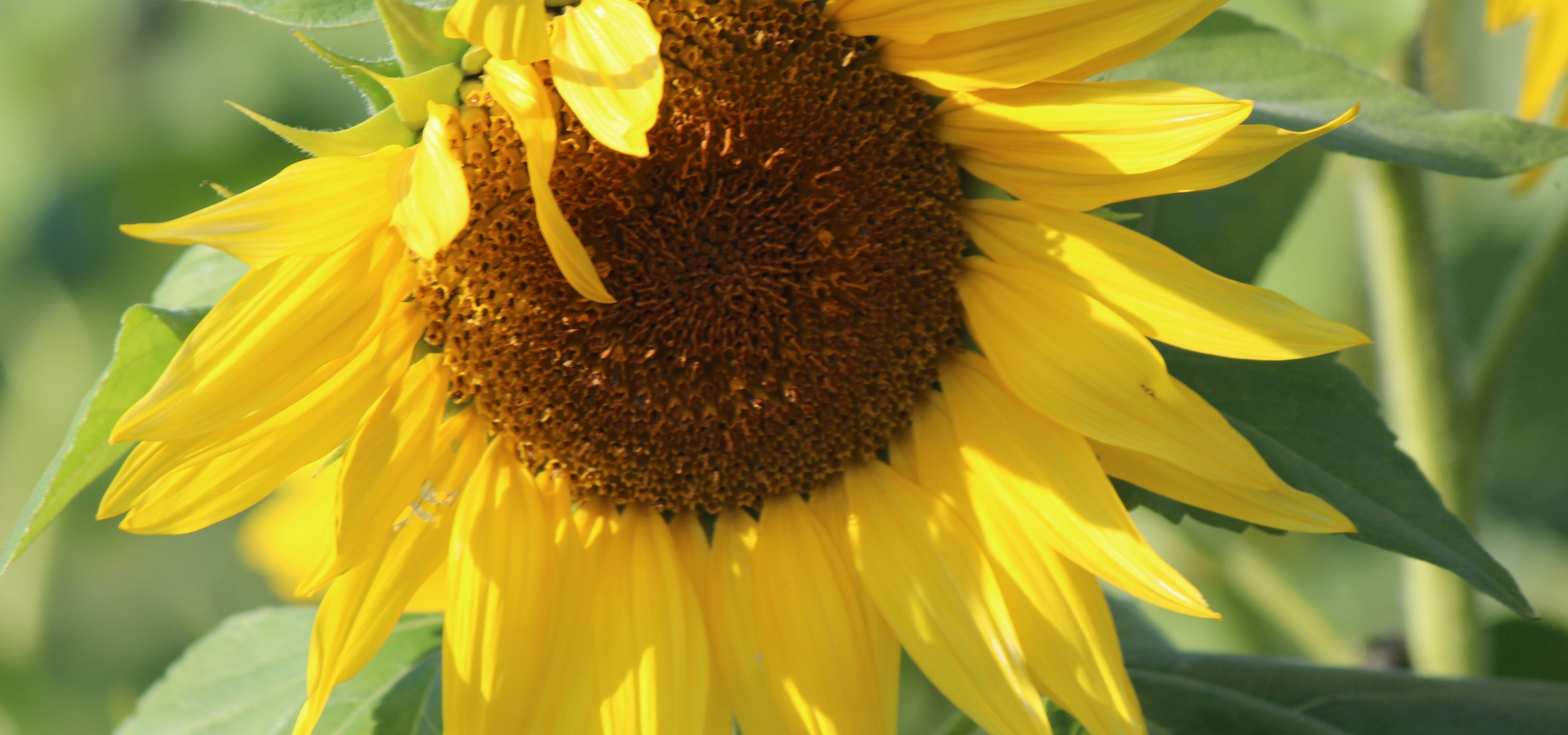
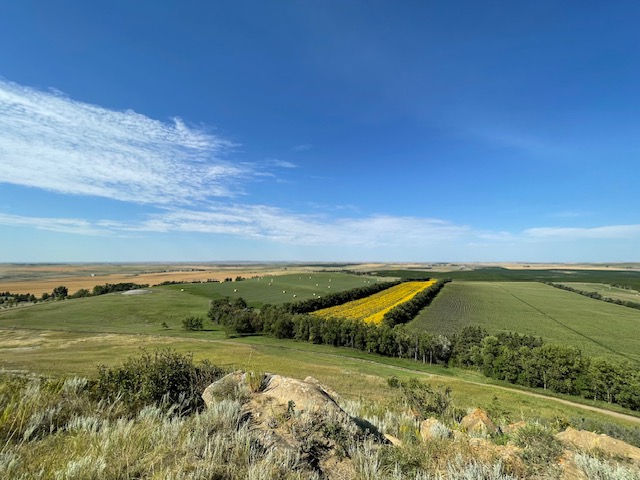
Hitting the open road with the world’s largest buffalo statue in our rearview mirror, K2 and I headed west across the North Dakota Plains. From time to time as we drove, our eyes were drawn to the fields to both our left and right sides of the interstate. In the midst of the grass and the cattle, between the smattering of oil wells and the antelope, a golden hue would appear and stretch across the ground to the horizon. One needs only to do a little research to find that North Dakota is one of the leading producers of sunflowers in the nation. But seeing these bright yellow flowers in full bloom as far as the eye can see is something that must be experienced in person. In 2022, 735,000 acres of North Dakota land was planted in sunflowers. Each year toward the end of summer an event called the “superbloom” takes place. It is an amazing and eye-catching experience where most of the sunflowers are in full bloom across the state at the same time. There is just something about sunflowers that make people smile. We grow them at the farm here in Tennessee and they are by far one of the main attractions for people every year. I believe it is because it is one of the simple pleasures of life. And we all need and love simple pleasures!
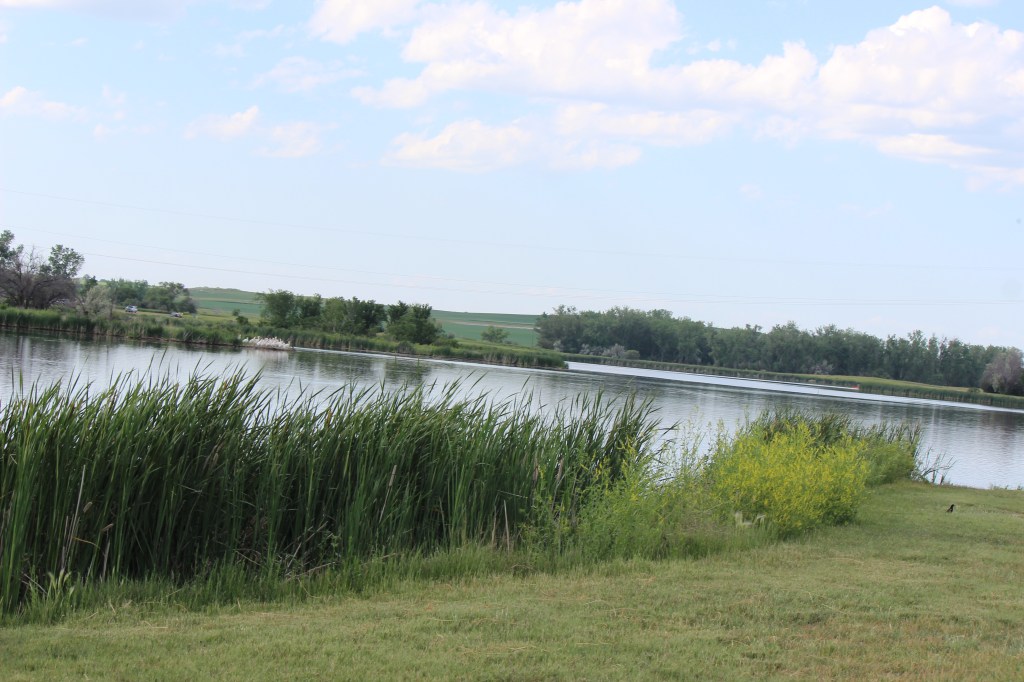
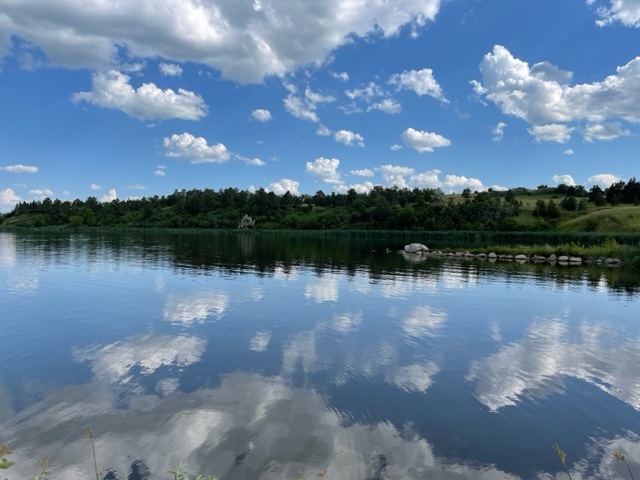
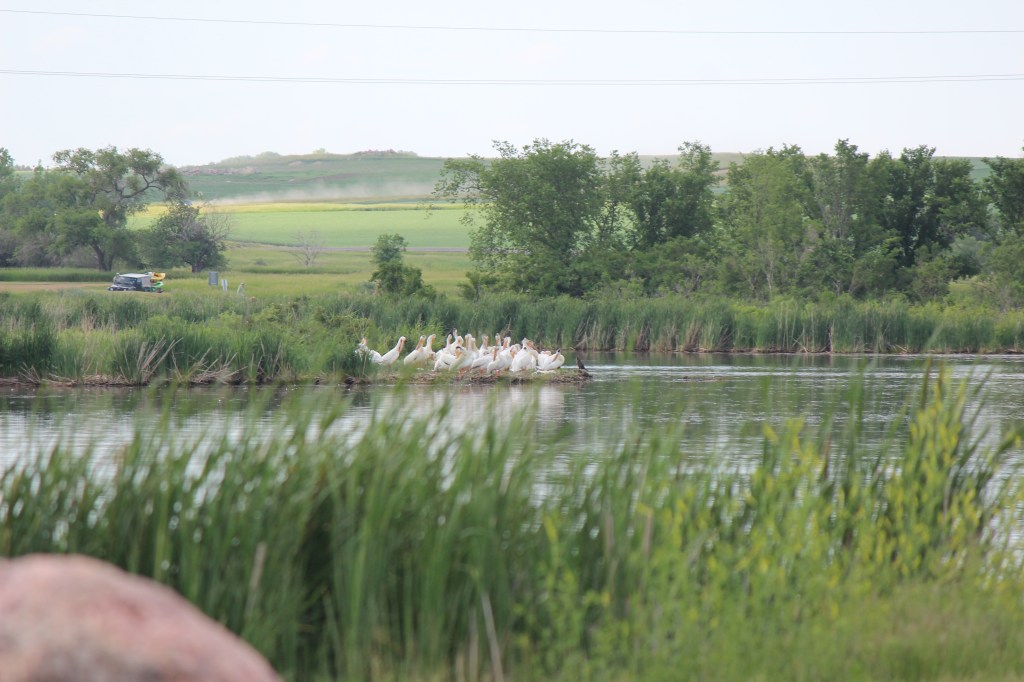
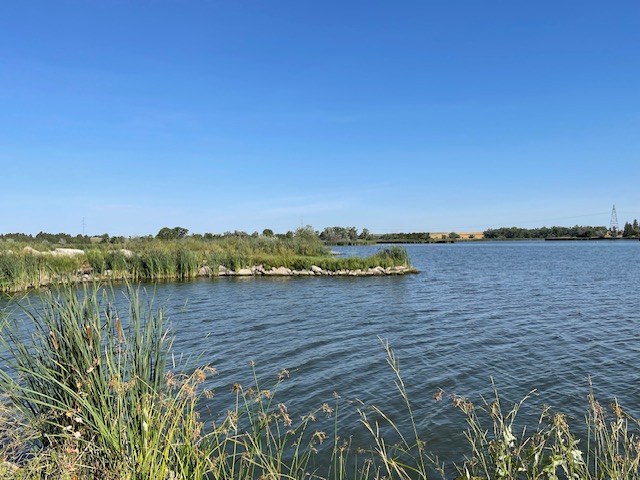
Driving through the middle of the state, you come to the capital of North Dakota. And while Bismarck was not on our itinerary this time around, K2 and I did find a hidden gem about 20 minutes west of the capital city. Ok, hidden is probably not the operative word as it is easily seen from and indeed right next to the interstate itself. But Sweet Briar Lake was a gem of a find for us, nonetheless. Just off exit 134 on I-94, the lake covers 278 acres with free, albeit primitive camping sites. There are picnic shelters, two boat ramps, fishing piers, and various, aforementioned places to camp. What strikes you the most about this place however, is the shear beauty of both the lake and the surrounding countryside. It is also a haven for waterfowl and is summer home to several species. The day K2 and I visited we were greeted by a large group of white pelicans. It is a great place to stop and have a picnic or stretch your legs on your journey across the state. More than that, places like Sweet Briar Lake are why we travel by car across country. It is the small nooks and crannies of the world that make all the difference. It is why we explore; it is why we wander!
Just a little further west (exit 127), amid the sunflower fields and the myriad of other crops that grow so vibrantly in the wind-swept glaciated plains of central North Dakota, rises Sue. If you thought the Buffalo statue was big, well Sue gives you reason to pause. Visible for some five miles away off I-94 in New Salem North Dakota, Salem Sue is the world’s largest Holstein cow. She stands overlooking the surrounding farmland at a whopping 38 feet tall, 50 feet long, and weighs in at 12,000 pounds. This is one big cow! Commissioned by the local Lions Club, and erected in 1974, Sue was built to pay homage to the local dairy industry. This fiberglass memorial has stood the test of time and now welcomes tourists from across the globe. If you take the time to climb the small hill behind Sue, you will be rewarded with a beautiful view of the surrounding countryside. It is a quick yet memorable stop along I-94, and an “udder” delight for all who visit.
And now, off to the western edge of North Dakota…
Happy Wandering!
K1





 Wandering Poet Adventures
Sounds like a wonderful journey.
LikeLiked by 2 people
That it was…
LikeLike
Love North Dakota!
The sunflowers are beautiful!
Wonder what Salem Sue looks like in the dead of winter ❄️
LikeLiked by 1 person